

NexPro Media Staff
Premier Lacrosse League has backing from NBC and Alibaba cofounder

The people behind the upstart Alliance of American Football (AAF), which debuted on CBS this month, have emphasized for months that the AAF is not trying to compete with the NFL; rather, it is partnering with the NFL.
By contrast, Premier Lacrosse League (PLL), which launches on NBC on June 1, is very much competing head-to-head with Major League Lacrosse, the current “big league” of American lacrosse.
Read more at Yahoo.
Yes, You can Make Money Playing Video Games. Here Are 7 Ways to Do It

Frederick Aldeco was the youngest of three boys who loved to game.
Growing up, he and his brothers first fought over who could play the Nintendo, then the Super Nintendo, then the PlayStation — he could only play when his older brothers let him.
Read more at The Penny Hoarder.
Australia Debates a Climate Strategy

A verdict rendered in a Sydney courtroom last Friday underscores how climate change and the past several months of weather catastrophes across Australia are influencing opinion across this country. On Feb. 8, an Australian court for the first time invoked climate change as a reason to reject a proposed coal mine.
The ruling, by Chief Judge Brian Preston in the New South Wales Land and Environment Court, refused approval for the proposed Rocky Hill mine, located near the small town of Gloucester, about 250 kilometers (155 miles) north of Sydney. Preston ruled building and operating the mine, along with transporting and burning the coal, would "result in the emission of greenhouse gases, which will contribute to climate change." The costs to the community would exceed the mine's economic and social benefits, he said.
Read more at US News.
Land Bill’s Passage Signals GOP Shift on Conservation
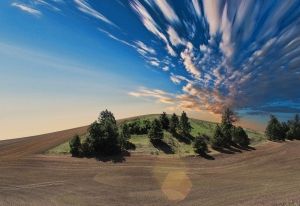
Privatization and devolution were once central planks in the Republican Party platform on federal lands, but the Senate's 92-8 vote for a sprawling conservation package that carried broad GOP support appears to signal a shift in the party's public stance.
For decades, Republican lawmakers openly called for handing federal control of public lands to state and local agencies, which they said would restore the country's natural wilderness to the residents who live closest to it. Environmental and conservation groups, by contrast, warned that such a move would grant the oil, gas and coal sectors far greater influence over regulators and policy makers. Whether because of rising alarm over climate change or other factors, concerns about conservation now seem to hold sway.
Read more at US News.
These States Are the Most Dependent on the Federal Government
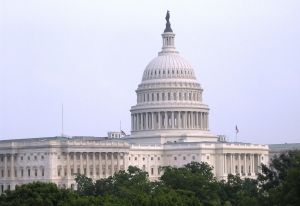
Ahead of Friday's deadline to avoid another government shutdown, lawmakers announced a deal Monday night that now awaits President Donald Trump's review.
If Trump does not accept the deal, which would allow for 55 miles of steel bollard fencing – falling far short of his demands for a more than 200-mile-long wall along the nation's Southern border – the government will shut down for the second time this year. During the last shutdown, the longest in U.S. history, 800,000 federal workers went unpaid. Some states were more affected than others, depending on how much of their workforce is employed by the federal government.
Read more at US News.
Liberia gold mine collapse: Dozens arrested at 'lawless' rescue site

They "resisted" a team sent to restore order at the site, said Archievego Doe of the disaster management agency.
Another official described the situation as "lawless".
Read more at BBC News.
Mountain lion in California tree 'rescued' by firefighters
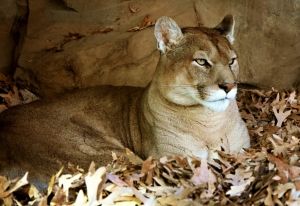
US firefighters arrived at the property in San Bernardino after the mountain lion - or cougar - was spotted perched on a branch about 50ft (15m) high.
The area was then secured and the animal was tranquilised and lowered to the ground using a harness.
Read more at BBC News.
IS teenage bride Shamima Begum gives birth to boy

Ms Begum left four years ago aged 15. Found in a Syrian refugee camp last week, she now hopes to return home.
The 19-year-old told Sky News: "People should have sympathy towards me for everything I've been through."
Read more at BBC News.
If You Have This Personality Trait, Chances Are You’re an Ideal Travel Companion

Curious about what makes someone great to travel with? Turns out, you might already have what it takes.
A new survey from Curio Collection by Hilton found that curiosity is the most desired trait that travelers look for in their companions.
Read more at Coastal Living.
Russian Authorities Declare State of Emergency After 'Mass Invasion' of Polar Bears in Remote Settlement
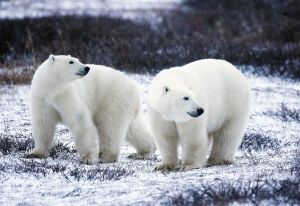
Russian authorities have declared a state of emergency in the remote, sparsely populated Novaya Zemlya islands in the Arctic Ocean, the BBC reported this weekend, after “dozens” of polar bears whose food sources are limited due to climate change started rooting through homes and other buildings near the settlement of Belushya Guba looking for something to eat.
According to the BBC, officials said that the bears no longer fear either police patrols or the signals used to keep them away from humans, and that they have even crossed onto the grounds of the local air defense garrison. Though the animals are considered endangered by Russia (the IUCN Red List classifies them as “vulnerable,” with a decreasing population), officials said that if non-lethal means fail to drive the bears away, they may be forced to cull the animals, the BBC added.
Read more at Earther.
- Popular
- Comments
-
 The Best Growth Stock No One Is Talking AboutFeb 19 2021
 -

-
 How to help Texas during winter storm blackoutsFeb 19 2021
 -

-

-
1
-
2
-
3
-
4
-
5