

NexPro Media Staff
China Doesn’t Want Your Trash
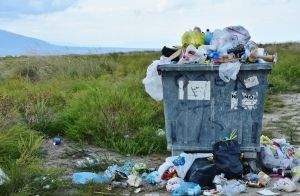
More of America's recycling is ending up in local landfills. And it's China's fault.
Decades after activists and environmentalists first began beseeching Americans to separate their bottles and cans – ultimately conditioning even the most recalcitrant consumer to believe that filling a blue bin could benefit the earth and ease their conscience – it turns out that an increasing amount of that waste is being thrown away.
Two states recently told residents that – at least for now – a healthy share of their recycling is going to end up in the dump. And after long emphasizing its benefits, the waste management industry is looking at ways to let the American public know that maybe they would be better off not recycling certain things.
Health Care Tops Americans’ Worries for Third Year in a Row

Health care is the issue Americans worry about the most, topping the economy as the public's primary concern for the third year in a row.
More than half of adults – 55 percent – in a new national Gallup survey say they worry "a great deal" about the availability and affordability of health care, while nearly a quarter say they say they worry a fair amount.
States to Prioritize Hiring Teachers of Color

They’re called “warm demanders” and “cultural guardians,” polite nods to the additional roles with which African-American and Latino teachers – often the only teachers of color in their schools – are typically tasked: disciplinarian, mentor, translator.
Lawrence Battle, a 29-year-old African-American social studies teacher at YES Prep's White Oak campus in Houston, would prefer to see those roles be ones of leadership positions: instructional coach, principal, school administrator.
America Is on the Move Again - And This Is Where They're Going

No, Texas. Everyone doesn't want to move there, despite population trends showing that six of the 10 fastest-growing counties in the country are in the Lone Star State. Same goes for you, Arizona. Sure, you're growing, but not at the rate you were prior to the Great Recession. And California? You're only getting bigger at a faster rate than the national average because of immigration. You're actually losing more residents than you're gaining from migration from other states.
Same-Sex Unions, Medical Marijuana Laws Mean More Innovation for States

Passing laws that allow same-sex unions or legalize medical marijuana can be more than just popular policy – they can also be good for business, a recent study suggests.
The research says that states that implemented social liberalization policies were rewarded with a 5 to 6 percent increase of innovation output compared to states that passed an anti-liberalization policy, which experienced a decrease of innovation by 1 percent.
Researchers defined social liberalization policies – legalizing same-sex civil unions, over a period between 1998 and 2006, or medical marijuana, between 1996 and 2006 – as policies in which government restrictions are eased. They also looked at states in which abortion laws were tightened between 1994 and 2006 as an example of anti-liberalization policy.
Web Foundation CEO: Getting the whole world online is our goal

The glory days of youth are known as a time for experimentation, making mistakes and figuring out what you want to be when you grow up.
One particular darling of our era, a bright young thing famously known as the World Wide Web, has spent 29 years doing just that. Now it's staring 30 down the barrel, and while many are enjoying its fruits, a significant number of people around the world still can't access it affordably and fairly.
Back in the web's 20th year, its creator, Tim Berners-Lee, founded the Web Foundation, a nonprofit that aimed to advance the open web as a public good and a basic right. Berners-Lee remains very much the visionary spokesman for the organization, but last summer the group appointed a new president and CEO to lead the foundation as the web navigates into the next stage of maturity.
Sensor firm Velodyne 'baffled' by Uber self-driving death

San Jose-based Velodyne told the BBC it was "baffled" by the incident, adding its equipment was capable of seeing in the dark.
Elaine Herzberg, 49, was struck by the car late on Sunday night in Tempe, Arizona. She died in hospital.
The investigation into what caused her death is ongoing.
Video of the incident was published by investigators earlier on Wednesday. It showed Ms Herzberg walking with her bicycle, away from a pedestrian crossing. Neither the car - nor its human driver - reacted.
A spokeswoman for Uber told the BBC it would not comment on Velodyne's view while the inquiry took place.
Spain Catalonia: Mass protests after Germany detains Puigdemont
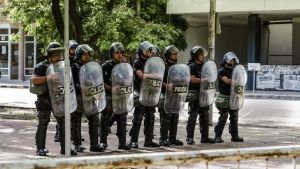
Mr Puigdemont, who is wanted in Spain for sedition and rebellion, was detained by German police acting on a European arrest warrant.
He will appear before a German judge later on Monday.
Clashes between protesters and police in Catalonia left at least 89 people injured and four arrests were made.
Mr Puigdemont was detained while crossing from Denmark on his way to Belgium, where he has been living in self-imposed exile since Catalonia's parliament unilaterally declared independence from Spain in October.
A European warrant for his arrest was reissued on Friday.
Russia fire: Children caught in deadly Kemerovo mall blaze

At least 48 people have died in a fire that tore through a shopping and entertainment complex in the Siberian coal-mining city of Kemerovo.
A further 27 people are missing and as many as 41 children may be among the victims, Russian officials say.
The blaze started on an upper floor of the Winter Cherry complex while many of the victims were in cinema halls.
Video posted on social media showed people jumping from windows to escape the flames on Sunday.
Some 660 emergency personnel have been deployed in the rescue effort.
The cause of the blaze is not yet known but authorities have launched an investigation.
Kemerovo, a key coal-producing area, lies about 3,600km (2,200 miles) east of Moscow.
Austrian Chancellor Sebastian Kurz has offered his condolences to the families and friends of the victims, as did Latvian Foreign Minister Edgars Rinkēvičs.
March For Our Lives: Six key takeaways from the US gun control rallies

It was the biggest gun control protest in a generation. Hundreds of rallies were staged across the US and beyond as marchers filled the streets calling for the implementation of tighter measures following the deadly mass shooting at a Florida school in February.
That incident not only ignited the #NeverAgain movement, but also Saturday's mass demonstrations, which took place under the banner of March For Our Lives.
With events not just in the US but as far afield as London, Paris, Mauritius, Tokyo, Stockholm, Sydney, Geneva and Berlin, the day was made up of powerful messages delivered by articulate students and children, most of whom have already in some way experienced gun violence.
Here are six key moments from some of the biggest US rallies since the Vietnam War era.
- Popular
- Comments
-
 The Best Growth Stock No One Is Talking AboutFeb 19 2021
 -

-
 How to help Texas during winter storm blackoutsFeb 19 2021
 -

-

-
1
-
2
-
3
-
4
-
5