

NexPro Media Staff
Government shutdown: ‘The people working just aren’t getting paychecks’

On day eight of the partial government shutdown, more federal workers — just 15 percent of whom work in Washington, D.C. — are notified of whether they will be furloughed or required to work without pay into the new year.
NPR congressional reporter Kelsey Snell joins Alison Stewart from the capital to discuss the financial impact of the shutdown and how nine major government agencies are affected.
Read more at PBS News.
Military women, female veterans are shifting away from GOP

It had been months since retired Lt. Cmdr. Michele Fitzpatrick paid attention to news coverage.
She was turned off by President Donald Trump’s tweetstorms and attacks on critics such as the late Republican Sen. John McCain, a war hero. But as the November midterm elections approached, she fired up her laptop.
Read more at PBS News.
More health exams instituted for migrant children at border
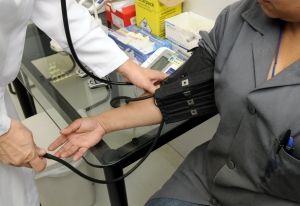
More thorough initial health screenings for migrants, as well as secondary screenings, will be held for every child in Border Patrol custody following the deaths of two Guatemalan children this month, according to the Department of Homeland Security.
Homeland Security Secretary Kirstjen Nielsen was visiting Yuma, Arizona, on Saturday, a day after her trip to meet border officials and medical staff in El Paso, Texas.
Read more at PBS News.
Oregon hotel fires 2 employees who mistreated black guest

An Oregon hotel said it fired two of its employees for mistreatment of a black guest who was talking on his phone in the lobby when he was asked to leave a week ago.
DoubleTree by Hilton hotel in Portland tweeted Saturday they have “terminated the employment of the two men involved.” They said the men’s actions “were inconsistent with our standards & values.” The hotel didn’t identify the employees.
Read more at Associated Press News.
Year 1 a mixed bag for businesses in California’s pot market

It was supposed to be a great year for marijuana entrepreneur Brian Blatz.
When California broadly legalized pot on Jan. 1, the lawyer with a background in banking and health care had been working for a year to set up a trucking company that would whisk fragrant marijuana buds, infused juices and other products from fields and production plants to store shelves.
Read more at Associated Press News.
Trump puts blame for child deaths at border on Democrats

In his first public statements on the deaths of two Guatemalan children in U.S. custody, President Donald Trump claimed they were “very sick” before they reached the border and foisted responsibility for their deaths on Democrats, yet both young migrants passed initial health screenings by Border Patrol.
While Trump and Democrats traded barbs over immigration policy, Homeland Security Secretary Kirstjen Nielsen was visiting medical officials and Border Patrol agents at the southern border in Arizona and Texas, promising additional wellness screenings for migrant children.
Read more at Associated Press News.
International "Santa survey" uncovers the average age children stop believing

A large, ongoing international study from the University of Exeter, dubbed the "Santa survey," is investigating how, and at what age, children begin to change their minds about the existence of Santa Claus. The research also examines whether a child's trust in adults is threatened by the discovery that Santa isn't real.
Read more at News Atlas.
Uber reaches tentative settlement with drivers arbitrating over employment status and expense reimbursement

Uber is reportedly on track to go public in the first quarter next year, and in the lead up to that, it’s sewing up some loose ends.
TechCrunch has learned that Uber has offered a tentative settlement to pay out 11 cents for every mile driven for Uber (including adjacent services like Uber Eats) to drivers who have been in individual arbitration with the company over their employment classification. Drivers were pursuing individual arbitration after an appeals court ruled in September that they could not combine their cases into a class action lawsuit.
Read more at Tech Crunch.
14 Top Cycling Routes Around The World

Feel the wind through your hair as you ride along some of the world’s most exhilarating cycling routes in the new year. Whether looking for a peaceful ride to explore exciting cultural hot spots in California, or challenging yourself to a tough endurance race up a mountain in Japan, there are plenty of opportunities for every type of cyclist.
Read more at Ecophiles.
Some 100-year-olds have the DNA markers of people in their 20s

These differences could someday indicate biological age—whether a person’s body functions as older or younger than their chronological age, the researchers say.
In a proof-of-concept study, researchers extracted cfDNA from blood samples from people in their 20s, people in their 70s, and healthy and unhealthy centenarians. The team detected differences in how the DNA was packaged in the four groups.
Read more at Futurity.
- Popular
- Comments
-
 The Best Growth Stock No One Is Talking AboutFeb 19 2021
 -

-
 How to help Texas during winter storm blackoutsFeb 19 2021
 -

-

-
1
-
2
-
3
-
4
-
5